The False-Friend Strategy: anatomy of a hidden strike
The False-Friend strategy is one of the most insidious technologies of psychological influence. It does not operate through open aggression, pressure or intimidation. On the contrary — it works through trust, warmth, sympathy and the illusion of moral support. Where you expect a sword strike, you stand on guard; where you expect a friendly handshake — you relax. And at exactly that moment the false friend, the manipulator's agent, delivers a thin, surgically precise strike.
This strategy is dangerous precisely because it is built on human values — friendship, openness, mutual aid, the need for honest dialogue. The manipulator, the predatory architect of intrigue, turns all of this into an instrument of destruction. Let us examine in detail — how exactly this technology works, what stages it includes and how to recognize it in time.
1. Preparatory stage of the manipulator
Any False-Friend strategy begins long before the "friend" himself appears. The manipulator starts by studying the potential victim — their values, emotional needs, worldview and weak points. His task is to understand which personality type evokes trust in the person, which moral strings can be pressed, which qualities can be turned against them.
Then the search for an agent begins. This can be:
- a person from the immediate circle who can be easily bribed, intimidated or lured by profit;
- a person whom the manipulator will convince that the cooperation is "nothing serious" and that they only "help with one specific matter";
- or a specially selected character — one who perfectly matches the psychological profile, evoking sympathy in the victim.
After recruitment, the agent undergoes briefing: how to gain trust, how to play on sympathy, when to show empathy, and when to withdraw in order to create the illusion of independence.
2. The stage of entering trust
The False Friend does not act abruptly. He weaves into the environment gently, like warm water gradually heating up. He shows interest in problems, shares "similar" stories, tells about his "difficult experiences" to create an artificial sense of kinship.
He may give advice — sometimes genuinely useful, to strengthen trust.
He may comfort in difficult moments — to cement himself in the victim's emotional space.
But this help has a hidden purpose:
- to gain access to personal information;
- to compose a deeper psychological profile;
- to cautiously steer thinking in a direction beneficial to the manipulator;
- and most importantly — to prepare the ground for future betrayal at a critical moment.
This period is the most skillful. The False Friend knows how to create a convincing mask of sympathy, and under it quietly collects data that will later be used against the person.
3. Camouflage techniques of the False Friend
To appear sincere, the False Friend often uses a set of subtle masks and gestures:
- demonstrative loyalty: praise, support, words about friendship and mutual assistance;
- controlled criticism of the enemy to prove his "position";
- periodic conflicts creating the illusion of honesty — after all, “if he sometimes argues, it means he is not faking everything”;
- imitation of risk, when the false friend pretends to "put himself at risk" to help.
Such a multilayered mask makes the agent convincing and psychologically comfortable — exactly what the manipulator aims for.
4. Moment of attack

The Hypocrite strikes not with a sword, but with a cynical devaluation of the struggle and human lives.
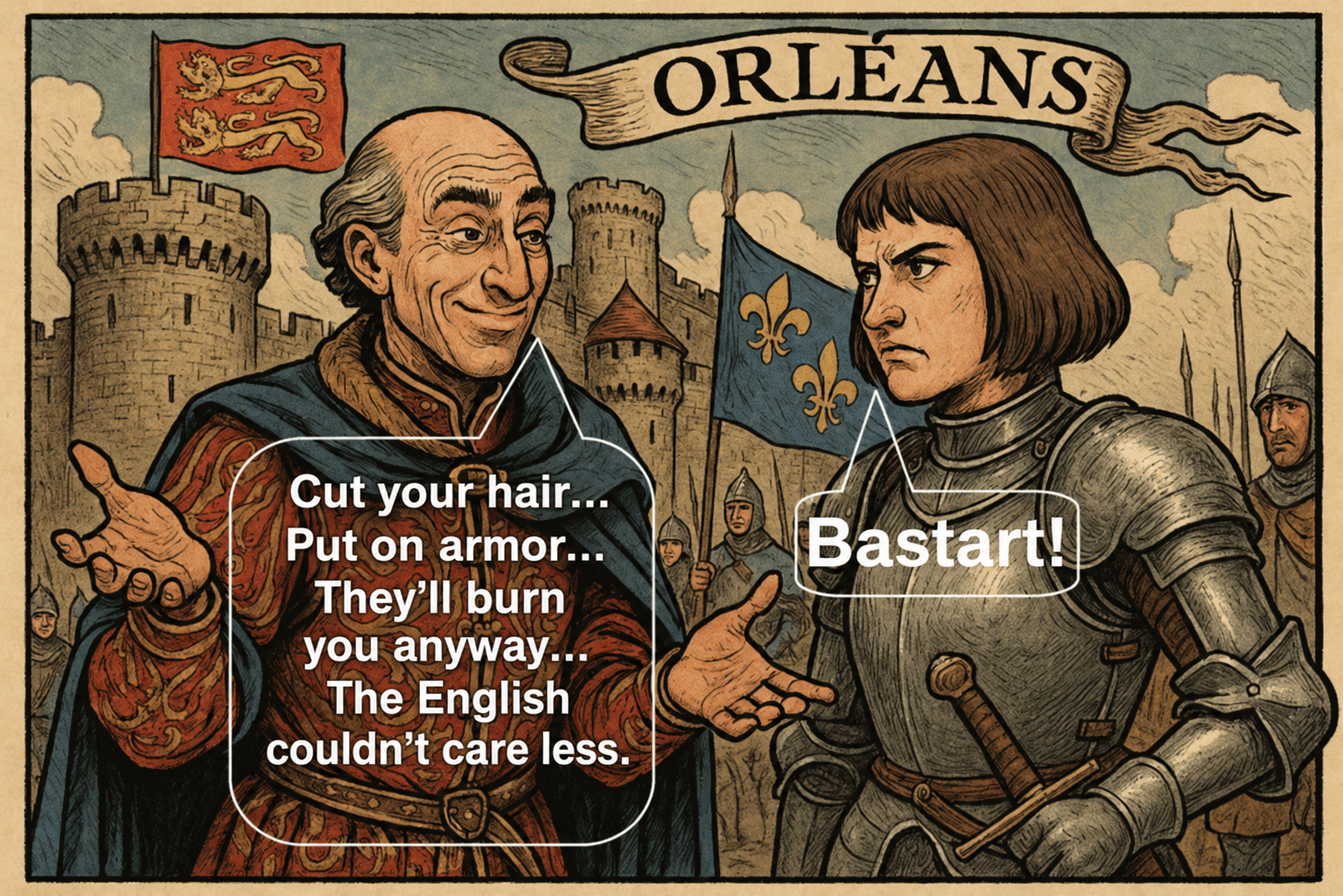
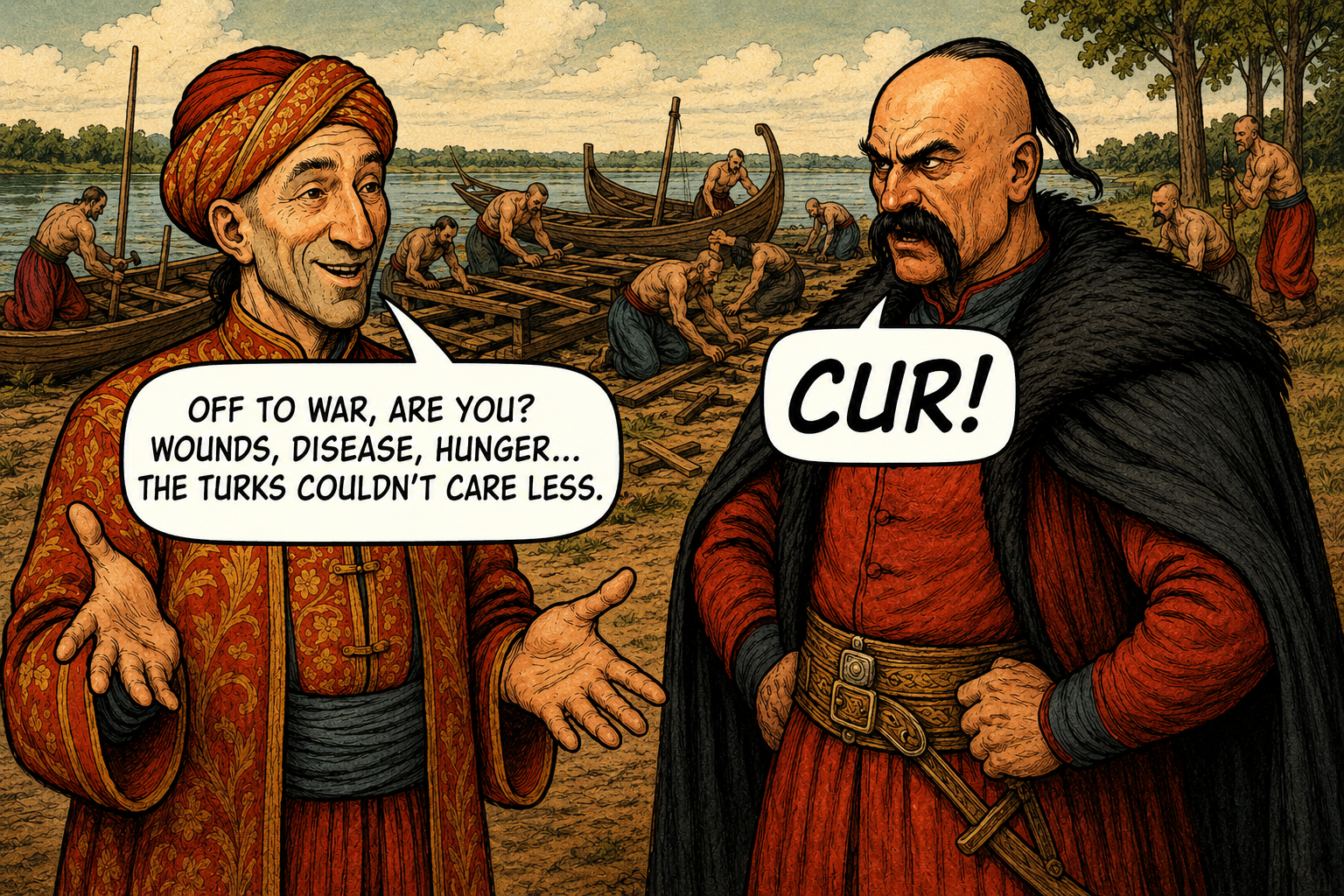
The False Friend's strike is delivered not at random, but only at the right moment — when the victim is maximally exhausted by the struggle, when trust has reached its maximum and emotional resources are at a minimum.
Forms of the strike can vary:
- leaking important information to the enemy;
- sabotaging a project in which support from the friend was expected;
- psychological pressure under the guise of a "honest conversation";
- sudden disappearance at the moment when help was truly needed;
- discrediting in front of others;
- gaslighting — an attempt to convince the victim that their own perception is incorrect.
Such a strike has a double force: it destroys not only a specific plan, but also the very structure of trust on which a person's identity rests.
False sympathy is especially worth noting.
On April 25, 2026, the false friend whose behavior I analyzed for this article said the following to me:
“I see that you are rebelling. Rebelling against what is happening in the human world (apparently, according to the false friend, there are some other worlds — where good fairies riding pink unicorns) with all its cynicism and hypocrisy of world politics, with the malice of some and the indifference of others, with that barbarism which should not be characteristic of the twenty-first century. I sincerely sympathize with you...”
The thing is, people fighting against evil (criminal groups, for example) do not need any sympathy. It is useless for them. They need help in forming a strategy that destroys the enemy's strategy.
This is precisely what a false friend will either never provide, or will provide a deliberately erroneous and ineffective strategy.
Furthermore, false sympathy has a dual nature:
- On the one hand, it is an attempt to worm its way into trust.
- On the other hand, it is an attempt at soft, indirect moral suppression.
That is, behind the external manifestation of sympathy, the following meaning is hidden: “Oh, how I feel sorry for you, that you, so weak and pathetic, are forced to fight such a powerful, influential opponent who, with impunity, causes you, the helpless one, so much harm.” In essence, this is an attempt to convince you of the enemy's total superiority and the futility of your struggle against him.
5. The danger of the False-Friend strategy
The strategy is dangerous for a number of reasons.
First, it uses the best qualities of human character — openness, honesty, readiness to help — turning them into points of vulnerability.
Second, the threats remain unseen for a long time. The aggressor is hidden behind a mask of care, warmth and understanding.
Third, the strike is usually delivered at a moment of emotional exhaustion — when a person is fighting a visible enemy and is counting on support.
And finally — the trauma of betrayal is deep. A person not only loses a situation; they are forced to revise the very idea of trust, and this can cause psychological harm far greater than the blow from an open enemy.
6. Methods for testing and identifying the False Friend

Despite the cunning of the strategy, the False Friend can be detected. For this, one must maintain cool clarity and concreteness.
A. Contractuality
If a relationship implies seriousness — there must be a contract.
A switch to "let's do it as bros" — is a red flag.
An honest person is not afraid of contracts.
B. Testing with real risk
Ask a potential friend to disclose sensitive information about the manipulator's actions.
Or provide data that could actually harm the manipulator.
Refusal or evasion is a sign that you are facing an agent.
C. Joint operation against the enemy
Propose participation in a concrete project that will cause measurable damage to the enemy.
Not words, not feelings — actions.
And be sure to check the consequences: was the harm real or was it an imitation created to strengthen trust.
D. Behavioral traps
Unexpected requests, urgent tasks, situations requiring honest decisions.
The False Friend will prevaricate, slow down, retreat.
The honest one — acts directly.
7. Example
As an example, one can cite a situation where potential "friends" are asked to tell everything they know about the tactics and strategy of the enemy, about the methods of his manipulation, about the technical characteristics of his tools. All those who swore friendship and assured their devotion — at that moment fall silent.
Because the False Friend is ready to talk about anything — except what really matters.
8. Conclusion
The False-Friend strategy is a subtle, sophisticated form of psychological warfare. It does not build on force, but on trust. Not on strikes, but on illusions. Not on open threat, but on a carefully scripted role of a caring, sympathetic, attentive "comrade".
But it can be exposed — and quite simply.
You need three things:
- a cool mind,
- clear sobriety of perception,
- and a willingness to test, not to believe words.
An honest person does not fear checks, because they have nothing to hide.
And the false friend fears the light, direct questions and concreteness.
Just turn on the light — and his theatrical mask begins to crumble, exposing the emptiness inside.
Thus any manipulator and his agent will sooner or later be exposed to someone who does not lose composure, does not cling to illusions, and knows how to see the true motivation behind actions.
⚠️ Warning: Even after a complete failure, the false friend may repeatedly try to regain your trust. He will skillfully pretend to have completely changed and reformed, continue attempting to buy your trust with fake moral support and compliments, criticize and discredit your enemies (as usual — in words, not in deeds) — and so on, hoping that you will waver and trust him again.
He does this because:
- he is bribed by your enemy and must deliver on the contract;
- he seeks revenge for being exposed;
- he is testing new trust-building techniques on you: "That approach didn't work — he told me to go to hell. Let me try another and see what happens";
- and the like.
Understand this: it is merely a cynical plan for a repeated attack. No miraculous transformation of the false friend's character has taken place.
Do not trust him. Continue to succinctly and cold-bloodedly send him to hell — or simply ignore him.
An even more sophisticated scenario is possible: the enemy may attempt to place another false friend into your circle. This new "ally" may position himself as an antagonist to the first, failed one, actively discrediting him — solely to buy your trust. The enemy might even find someone who genuinely has a real conflict with the first false friend.
❗ Do not be deluded into thinking that you have finally found a like-minded person who truly understands and supports you. Verify everything carefully.
When the false friend finally fails — exposed, expelled, and all his attempts to regain trust (sometimes lasting for years) methodically cut off — he will try to make a graceful exit, saving face.
He will say to you: "What did you want from me? Friendship? Support? Wise advice? We were never friends. You, for some reason, decided I was your friend and expected from me what I never promised. I am a stranger, busy with my own life. You shouldn't have relied on strangers."
In that case, know this: the false friend has simply exhausted all scenarios for gaining trust. His tactics have been read, recognized, and no longer work. So he changes his approach — from ingratiating himself at any cost to skeptical, detached criticism.
Such behavior — especially following long and persistent but failed attempts to regain trust — is direct evidence of the failure of both the false friend himself and his employers.
This is not just a failure. It is your victory. And a sign that their game is over.
Dedicated to my former friend — a poet, cultural scholar, and teacher of rhetoric, who wrote patriotic odes about the resilience of the people in the face of the enemy, yet served that very enemy, spying on his fellow citizens. May his name and memory be consigned to the flames, as befits a traitor.