Disclaimer: This article is a critique of fraudulent and manipulative practices that exploit cultural imagery. The author's intent is not to offend any national, cultural, or religious traditions. The modern scientific and technological progress of China, achieved through rational knowledge, is an undeniable historical fact.
Fraudulent Manipulations of the Romanticized Image of Ancient China and Modern China: The Triumph of Science and Technology
1. The Romantic Myth of "Ancient China": Folklore Tale Instead of Historical Reality
In the mass consciousness of post-Soviet countries, as well as a significant part of the Western audience, the image of China as a land of timeless wisdom, shrouded in the aroma of sandalwood sticks, silk, tea ceremonies, and mysterious practices, has become firmly entrenched. This speculative construct is not historical China, but romanticized China: a country where dragons descend from the heavens, where sages in bamboo groves comprehend the Tao through meditative contemplation, and where any decision — from choosing a spouse to declaring war — is made through divination on a turtle shell or thousand-year-old yarrow stalks.
A particular piquancy is added to this myth by the thesis of direct and continuous continuity: as if modern China is still that same "ancient China," simply having donned a European suit and mastered smartphones. But beneath Western clothing beats the same heart, believing in the energy of Qi, reincarnation, and the magical power of the character.
This image is not just a beautiful fairy tale. It has become a commodity, a brand, a marketing package. And like any brand, it has little in common with the real product.
Historical truth is simultaneously much more prosaic and more interesting. For millennia, China has been a country of academies, examinations, bureaucracy, and mathematicians. Confucianism, which became the state ideology, is essentially an ethical-legal system, extremely skeptical of miracles and divination. Yes, divinatory practices existed, but they were only part of ritual life, not the foundation of state decision-making. And certainly none of the educated Chinese officials built a career on "intuitive insight."
| Invention | First appearance in China | First appearance in Europe | Technological gap |
|---|---|---|---|
| Silk | ~2700 BCE | ~550 CE | ~3200 years |
| Cast iron (mass production in long-cycle/continuous furnaces) | ~500 BCE (state foundries, serial casting) | ~1380 CE (first blast furnaces in Europe; before that — disposable dismantlable furnaces) | ~1900 years |
| Compass | ~200 BCE | ~1180 CE | ~1380 years |
| Printing press | ~650–670 CE | ~1450 CE | ~800 years |
| Mechanical clock | ~725 CE | ~1300 CE | ~575 years |
| Gunpowder | ~650–808 CE | ~1285 CE | ~480 years |
| Paper money | ~700–800 CE | ~1661 CE | ~860 years |
| Encyclopedias (类书, Leishu) | "Huanglan" — 220–222 CE (lost); "Yongle Dadian" — 1408 CE (370 million characters, 11,095 volumes) | "Encyclopedia Britannica" — 1768 CE (first edition) | ~360 years after "Yongle Dadian," ~1500 years after the first encyclopedias |
| Imperial Academy / Higher education | Guozijian (国子监) — 1306 CE (founded); Nanjing Academy — up to 9,000 students (peak, Ming dynasty) | First European universities (Bologna, Paris, Oxford) — 11th–13th centuries; up to 1,000 students | The largest higher education institution in the world; scale — 9+ times larger than European counterparts |
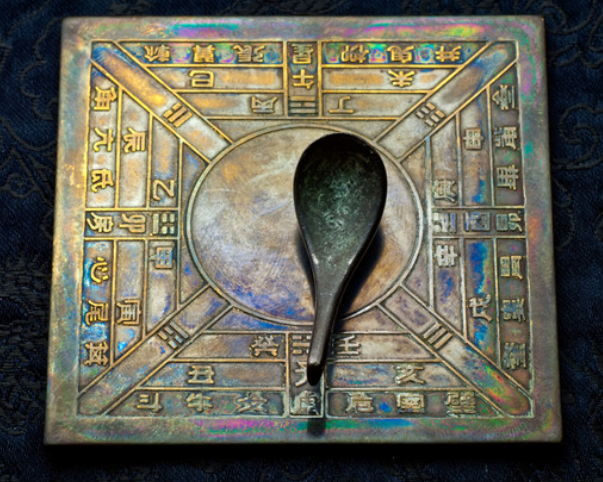

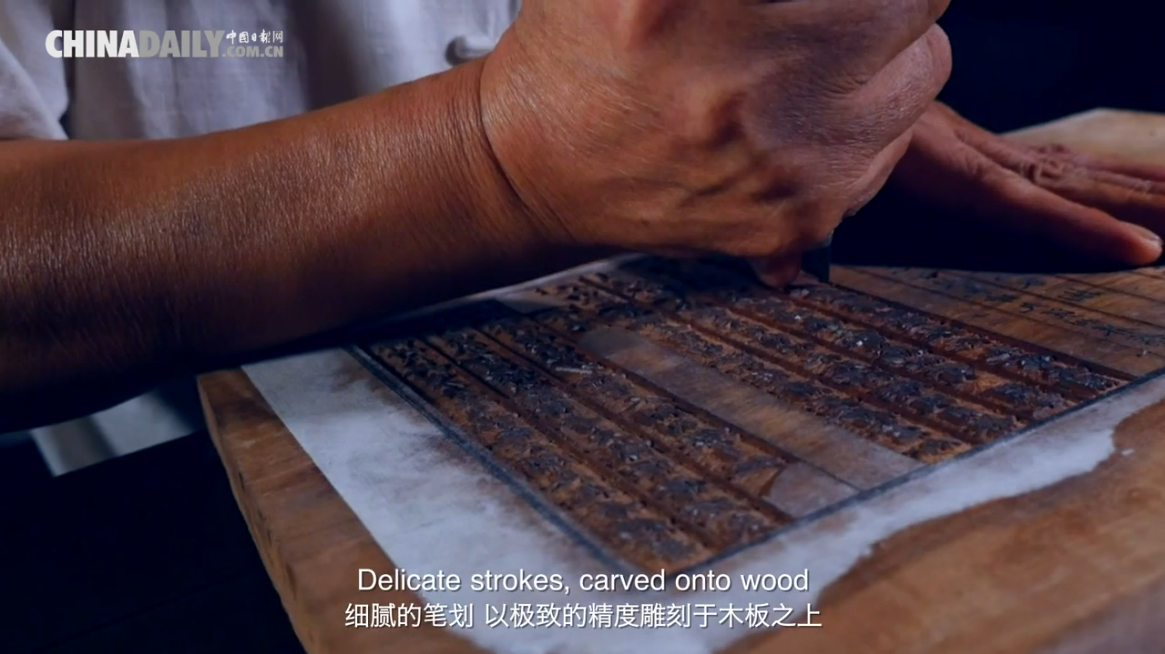

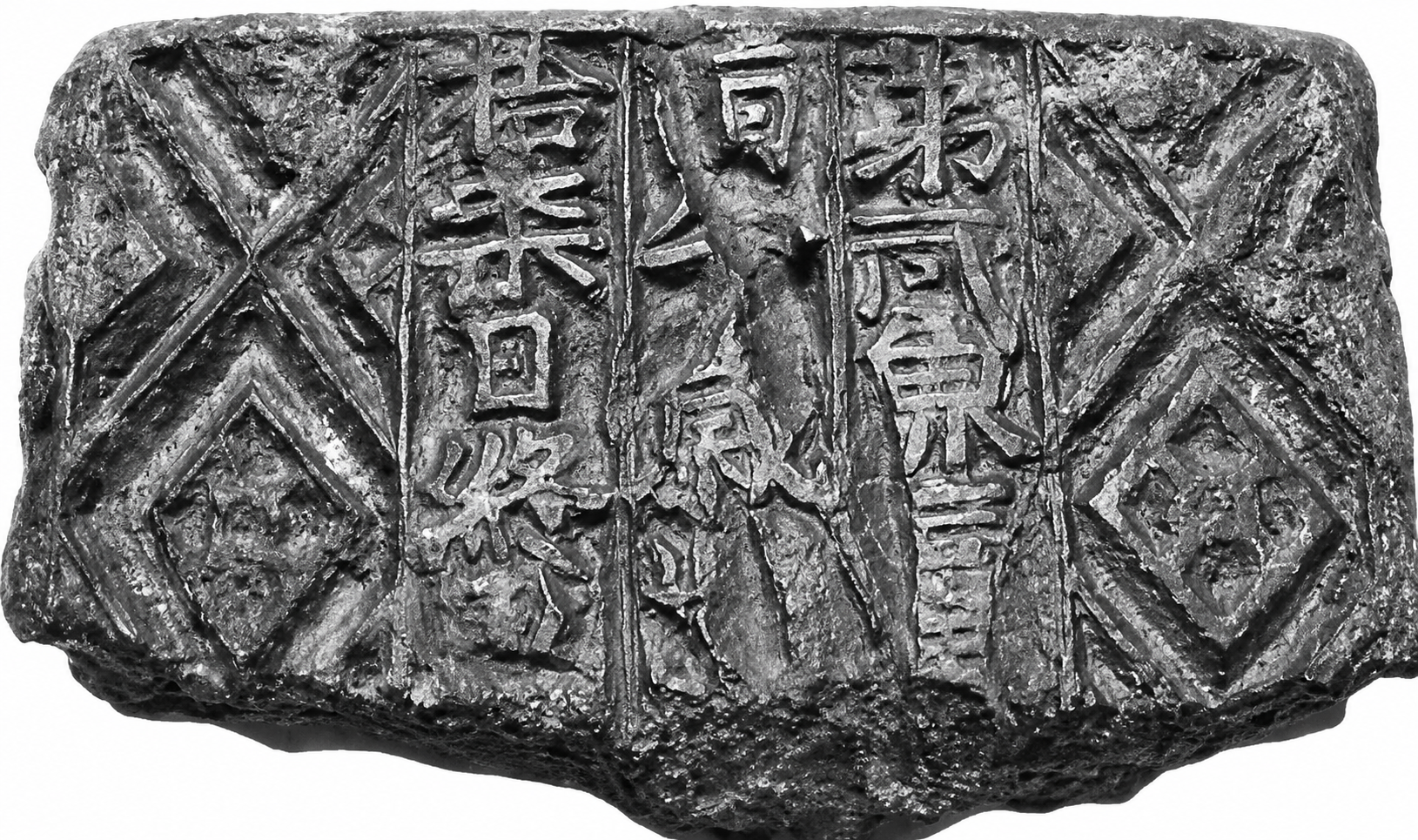
License: Creative Commons Attribution-Share Alike 3.0 Unported. Source: Baidu Baike.
Imperial Academy Guozijian (国子监) — Beijing
Schematic layout (South — North axis) | Total area: ~28,000 m² | Founded: 1306 CE
(East Wing)
(West Wing)
© CyberSecurity & Social Engineering
These figures leave no doubt: for nearly two thousand years, China was one of the world's most important generators of technological innovation. Not a land of mystics and fortune-tellers living in mountain estates and visiting each other on the backs of dragons.
The romantic myth of "magical China" is a product of 19th-century European Orientalism, mixed with the fantasies of early travelers and writers who sought in the East an alternative to their own industrial and rational world, from which they themselves had begun to tire. This myth is not knowledge, but a longing for a lost "paradise," a projection of desires.
2. From Harmless Fairy Tale to Tool of Manipulation
The beautiful myth in itself could remain a harmless cultural exoticism, like souvenir dragons or "Milky Oolong" tea. The problem arises when this myth falls into the hands of pseudo-orientalists, manipulators, and charlatans.
For them, the image of "ancient magical China" becomes not a romantic metaphor, but an instrument of power over consciousness. The mechanism is simple and cynical:
The Manipulation Mechanism Using the Romanticized Image of "Ancient China"
© CyberSecurity & Social Engineering
Thus, the romantic myth of antiquity turns into a propaganda machine that does not preserve culture but destroys a person's ability to think critically. Formally, you are called upon not to lose your "unique ethnic culture" — but in reality, you are being imposed with contempt for science, rationality, facts, and logic. You are instilled with the idea that you need to make vitally important decisions (about health, business, family) by tossing a coin or "feeling with your inner voice."
The results of such "predictions" are, of course, falsified or interpreted by the manipulator for his own selfish interests. The more catastrophic the consequences, the stronger the pressure: "You just don't believe enough," "You haven't opened your heart," "This is karma punishing you."
3. The Image of "Continuity" as Aggressive Anti-Scientific Propaganda
The key element of manipulation is the thesis of direct continuity. As if modern China achieved success precisely because it preserved the connection with the ancient mystical tradition. And we, his students and followers, are the keepers of this living thread.
This is a lie.
Moreover — it is aggressive propaganda aimed at substituting cause-and-effect relationships. Real China achieved its triumph despite mysticism, not because of it. And the official policy of the PRC is the best proof of that.
The manipulator creates an image of China that does not exist in nature. He talks to you about "ancient wisdom" but remains silent about the fact that the Chinese state systematically and harshly fights against any forms of irrational worldview when they go beyond the boundaries of cultural heritage and begin to claim the role of an instrument of cognition or decision-making.
4. Modern China: The Triumph of Scientific and Technical Progress and the Break with Mysticism
Now let us turn to the facts. To the real China, and not to its caricatured image drawn by charlatans.
4.1. Unprecedented Civilizational Success
China today is a power that:
- is creating a full-fledged aircraft carrier fleet (the second country in the world after the USA);
- is building its own orbital station "Tiangong" and returning lunar soil samples;
- by the number of space launches (67 in 2023) is second only to the USA and significantly outpaces Russia (19) and India (7);
- is independently developing a thermonuclear reactor (EAST, CFETR), setting a world record for plasma confinement — 1056 seconds at temperatures exceeding 160 million degrees.
- According to OECD data, for the first time in history, both China and the US exceeded the $1 trillion mark in R&D spending in 2024 (in purchasing power parity, PPP terms). With its investments growing by nearly 10% annually, China has effectively closed the gap with the US.

On June 25, 2024, the Chang'e-6 space probe collected and returned to Earth samples of lunar soil from the far side of the Moon for the first time in human history. This was announced by the China National Space Administration.

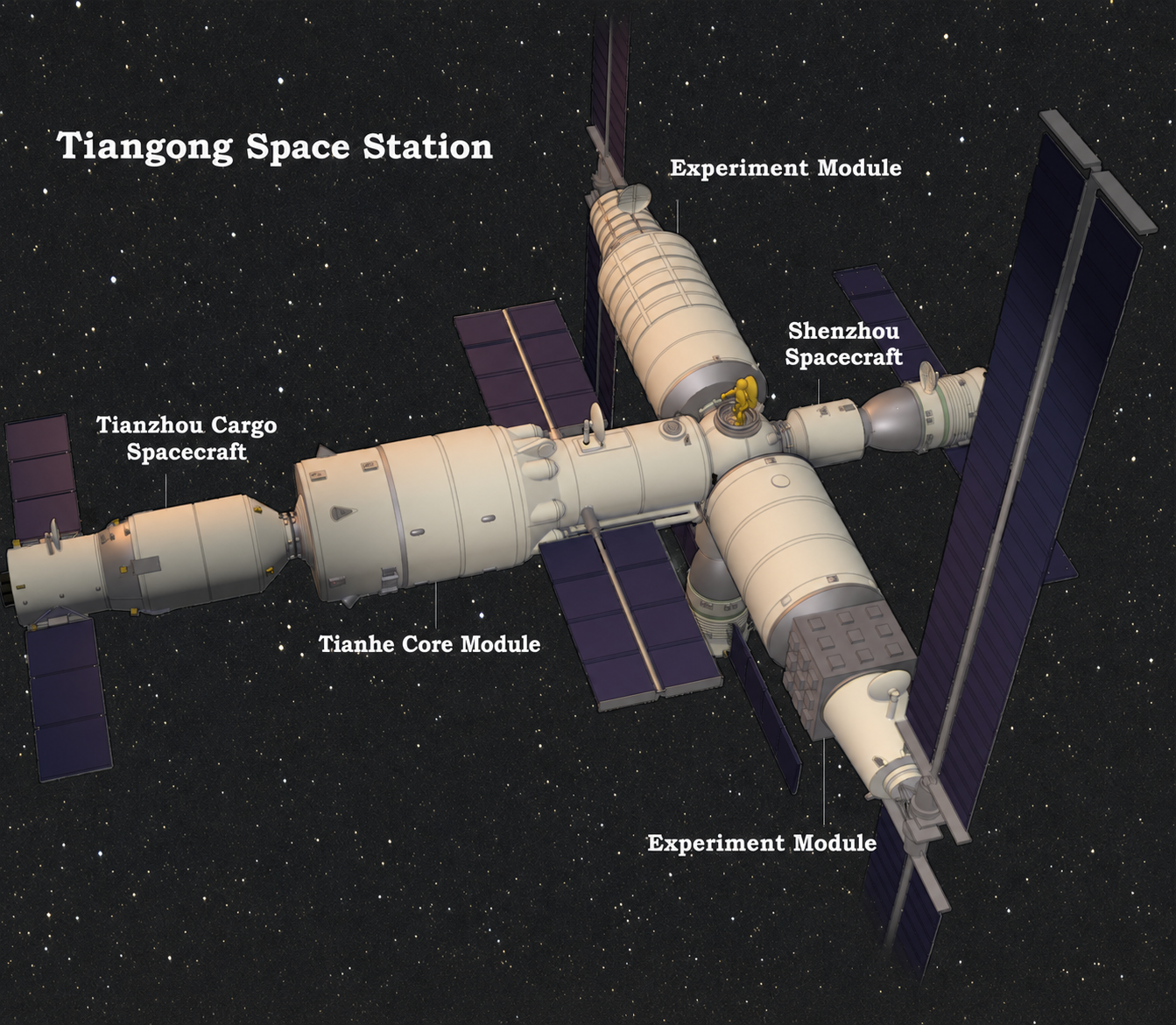
Tiangong ("Heavenly Palace") is China's permanently crewed orbital space station. The complex consists of the Tianhe Core Module, two experiment modules, and visiting Shenzhou crew spacecraft and Tianzhou cargo spacecraft that transport astronauts, supplies, and scientific equipment to orbit.
This is a success that China has never known in its entire history. There was nothing like it under the Tang, Song, or Ming dynasties.
No "intuitive insight" or turtle shell divination would have built a single aircraft carrier or launched a single rocket.
4.2. The Reason for Success: Science, Not Mysticism
The reason for this breakthrough is simple and unpleasant for manipulators: a systemic rejection of irrational worldviews and consistent adherence to science.
China did not build the factories of the future on the "inner voice." It built them on physics, chemistry, mathematics, materials science, and cybernetics. It sent students not to fortune-tellers, but to the best technical universities in the world, and then created its own.
The Chinese Communist Party proclaimed atheism as its official ideology, and its members do not have the right to profess any religion. This is enshrined in the CCP Charter and other party documents. The decision, made in 1949 and confirmed over decades, was conditioned, among other things, by tragic lessons of history: the Yellow Turban Rebellion in 184 AD (religious fanaticism led to the loss of more than two-thirds of the population) and the defeat in the Opium Wars of the 19th century, where conservatism and belief in traditions turned into a technological catastrophe (The latest British ships and their artillery were many times more effective than their Chinese counterparts).

| Specification | HMS Nemesis (British) | Chinese war junk |
|---|---|---|
| Hull | Iron | Wooden |
| Propulsion | Steam (2 × 120 hp) | Sails |
| Displacement | 660 tons | 200–400 tons |
| Armament | 32-pounder guns, swivel platforms | 8–18 small guns, fixed positions |
| Maneuverability | High (independent of wind) | Low (fully dependent on wind) |
4.3. Fighting the Occult Past: Documents and Facts
The Chinese state is waging not just a cultural, but an administrative and legal struggle against those forms of traditional practices that go beyond the scope of health-improving physical culture or museum exhibits.
Take Qigong. In an official document of the State Council of the People's Republic of China (Letter No. 77 of 1999), it is directly stated:
"Some, under the cover of 'Qigong,' preach superstition; illegally practice medicine, harming the physical and mental health of the people; engage in illegal business, fraud under the name of Qigong…"
Qigong is permitted and even encouraged only as health-improving gymnastics (sports-health-improving form), certified by the state. Any mystical component — "external Qigong," energy transmission, healing, "spiritual transformation" — is outside the law.
Moreover, the Supreme People's Court and the Supreme People's Procuratorate of the PRC (2017 clarification, Article 300 of the PRC Criminal Code) gave a clear definition of a "sect":
"An organization created under the guise of religion, Qigong, or another name, deifying the leading participant, using means of creating and spreading superstitious teachings to deceive and mislead people, recruit and control them, and causing harm to society — shall be recognized as a 'sect'."
The signs listed in this definition coincide one-to-one with the working methods of many pseudo-orientalist manipulators in the post-Soviet space, including the one whom the author of this article encountered.
- Nature of the crime: An organized group, posing as "feng shui masters" and "experts in Taoist rituals," intimidated victims with fabricated "curses" and "dangers" to their families, then charged large sums for "purification rituals."
- Arrests: Nanjing police detained 92 suspects.
- Damages and victims: The fraudsters stole over 46 million yuan (approximately $6.5 million) from 1,400 people across the country.
- Court verdict: The Nanjing People's Court sentenced 88 individuals to prison terms ranging from 1 to 11 years, along with substantial fines, for fraud and organizing a criminal syndicate.
- Official position: Police stated they would "resolutely combat any form of superstitious activity that undermines public order."
(Source: Nanjing People's Procuratorate, CCTV, August 2025)
- Nature of the activity: Zheng Feng created paid "life energy" courses under the banner of the "Institute of Life Sciences," positioning himself as a "descendant of a deity" and the "Sixth Patriarch" of the Taoist school. He promised healing, the opening of the "third eye," and the transmission of divine knowledge.
- Business model: A multi-level marketing (MLM) pyramid scheme with entry fees ranging from 990 to 100,000 yuan. Participants received commissions for recruiting new members.
- Scale and damages: More than 700 followers, over 31.8 million yuan (approximately $4.4 million) collected.
- Court verdict: The Hainan People's Court sentenced Zheng Feng to 19 years in prison and a fine of 1.35 million yuan for fraud, organizing a pyramid scheme, and illegal business operations.
- Official position: The court stated that Zheng Feng's activities "grossly violated public order and caused serious harm to the interests of citizens."
(Source: Hainan Provincial People's Court, April 2025)
It is worth noting that qigong as a health-improving gymnastics is indeed quite effective. For a modern city dweller suffering from physical inactivity for many years, it can provide a strong and rapid improvement in well-being. But there is no magic in this — it is the ordinary "zero baseline" effect in sports terms. An experienced athlete who understands the principles of regular warm-up exercises would not be surprised by this. The improvement in well-being comes from proper physical activity, not from supernatural forces.
4.4. Active promotion of a scientific worldview: science fiction as a state strategy
China does not limit itself to prohibitions. It actively and purposefully shapes a scientific worldview among the population, especially young people.
In 2019, the CCP and the State Council of the PRC published a document "On the Development of the Cultural Industry of Science Fiction", which directly states:
"Science fiction has the unique ability to stimulate scientific thinking, shape strategic imagination, and awaken the interest of young people in innovation and technical progress."
This state strategy has deep roots. As early as 2016, at the first China Science Fiction Convention, then Vice President of the PRC, influential Politburo member Li Yuanchao declared:
"Scientific and technological innovation is an important force driving the progress of human society. Popular science and science fiction literature are important sources of scientific and technological innovation."
And in 2019, the President of the China Association for Science and Technology (CAST) Huai Jinpeng, opening the Science Fiction Convention, emphasized:
"Science fiction demonstrates the beauty, culture, and humanity of science and plays a unique role in igniting the imagination and innovative abilities of young people."
These statements are not empty words. Behind them stands systematic work at the highest level:
- State funding for festivals, publishing houses, and awards;
- Inclusion of science fiction in school curricula and university courses;
- Support for authors (Liu Cixin, Hugo Award winner; Hao Jingfang; Chen Qiufan; Baoshu);
- Translation of Chinese science fiction into dozens of languages and its promotion as part of "soft power."

Thus, in his famous "The Three-Body Problem," Liu Cixin passes judgment on irrational thinking. The I Ching did not save civilization. It will be saved by a scientist who calculates the movement of the stars.

"I have always believed that the most beautiful fairy tales in human history were told not by wandering bards or novelists or playwrights, but by science. What science tells is far more majestic, more grand, more interesting, deeper, stranger, scarier, more mysterious, and even more emotional than all of literature; only these gripping stories are locked within the lines of cold equations that most people cannot read."
— Liu Cixin, from the essay "Poetic Science Fiction" (collection "A View from the Stars", Tor Books, 2024; first published in 2014)
For comparison: in Russia and other post-Soviet countries, science fiction was pushed to the periphery after the 1990s, giving way to fantasy, esotericism, and "ethnic fantasy."
Often this kind of fantasy goes to the point of absurdity, smoothly flowing:
- into esotericism and pseudo-history about mighty Slavic priests of the pre-Christian period (who, for all their power, proved incapable of stopping Christianization);
- into an occult synthesis of Orthodoxy and Hindu beliefs (distorting both beyond recognition);
- and also — which is the subject of this article — into the idea of China as a magical land of mystics and wizards (discussions of this kind are conducted online most often from PCs and mobile devices manufactured in China).
All of this distorts young people's adequate perception of reality and makes them vulnerable to manipulators and charlatans of an occult bent.
China, however, is betting on a future where not the sword wins, but calculation; not magic, but physics.
4.5. Conclusion: Real China Does Not Match the Manipulators' Image
Thus, the real picture of modern China and its success has nothing in common with the image that charlatans use for their propaganda.
| Image of China among manipulators | Real China |
|---|---|
| Land of secret mystical knowledge | Land of academies, examinations, and engineering |
| Success due to the continuity of ancient magic | Success due to science, technology, and the rejection of mysticism |
| I Ching divination as a decision-making method | Fighting superstition, legal prosecution of sects |
| "Inner voice" and "intuitive insight" | Science fiction, logic, mathematical modeling |
| You are unique, the truth will be revealed to you | Study, take exams, work on yourself |
China's success was achieved not by the continuity of ancient mythology (especially in the distorted interpretation of charlatans), but through:
- the application of modern scientific knowledge;
- the development of the technological and industrial base;
- the synthesis of rational thinking with traditional humanistic ethics (and not mysticism).
The manipulative image of China as a carrier of "unique secret knowledge" — which, of course, only the manipulator himself can tell you about, and no one else — is just a form of dirty business. Selling hot air. Or, more precisely, selling your dependency.
4.6. How to Properly Treat Ancient Culture?
Respecting ancient culture is indeed important. But respecting does not mean worshipping. Studying does not mean reproducing archaic practices in the 21st century.
The correct attitude towards cultural heritage is:
- To study ancient philosophy from the perspective of modern science: history, philology, anthropology, sociology.
- To be as unbiased as possible: not to deny value, but also not to deify it.
- Not to try to reproduce outdated mythological ideas and practices, especially in the distorted form of charlatans.
- To understand the context: what worked (or seemed to work) 2000 years ago is not a guide to action in the era of quantum computers and AI.
Classical philosophy — be it Chinese, Greek, or Indian — is the history of human thought, its ups and downs, its insights and its delusions. That is exactly how it should be studied. Not as an instruction manual for the Universe.
5. The Moral Character of the Manipulator: A Concrete Story Familiar to Many
So that the reader does not think that all of the above is abstract theory, let us describe a specific manipulator whom the author of this article encountered. His portrait is a composite for an entire class of pseudo-orientalists who parasitize the romantic myth of China. (The description is based on the author's personal experience)
5.1. Star Fever After a Couple of Translations
This man began his career by translating several texts of classical Chinese philosophy into one of the European languages. The work was done at an acceptable, but by no means outstanding level. However, after the publication of the translations (probably coinciding with a shortage of quality literature in this niche), he came down with "star fever." He began to consider himself hardly the leading expert on Chinese culture in the entire country, if not the world.
No systematic scientific research, no fieldwork, no immersion in the Chinese academic environment. Only translations and growing conceit.
5.2. Business Decisions through the I Ching: Divination Instead of Strategy
In addition to translations, he actively engaged in the propaganda of "business strategies" based on the I Ching. He proposes making key decisions (investments, hiring, product launches) through I Ching divination by tossing a coin.
Of course, this is presented under the guise of "ancient Chinese wisdom," "taking into account the energy of the moment," and "synergy with the Tao." In reality, it is pure charlatanism, the substitution of professional management and risk management with a ritual, the result of which the manipulator can always interpret in his favor.
5.3. A European Teaching the Chinese about Their Own Culture
The most absurd traits of this manipulator:
- He was born and raised in a European country. There have never been any people of Asian descent in his family.
- He spends the vast majority of his time in his homeland, only occasionally visiting China on short-term business trips.
- At the same time, he believes that he knows the "wisdom of the I Ching" better than the Chinese themselves, who have lived in China their entire lives and received upbringing from the same indigenous Chinese people — their fathers, grandfathers, and great-grandfathers.
This is not just arrogance. This is a form of intellectual colonialism. Imagine a Chinese person who, after spending two weeks in Paris, would start teaching the French how to correctly understand Rabelais or Descartes. Absurd. But why is it that when it comes to China, such absurdity is taken seriously by many?
5.4. Contempt for Chan Buddhism
His attitude towards Chan Buddhism is revealing. Chan is as important and organic a current of Chinese philosophical thought as Confucianism, Taoism, or, for that matter, the I Ching school. But the manipulator treats Chan with open contempt.
Why? Because Chan Buddhism does not provide tools for manipulation. It does not promise instant enlightenment for money. It does not offer divinatory procedures where the teacher would be an indispensable mediator. Chan is complex, paradoxical, and — most importantly — it requires independent work on oneself, not blind faith in a guru. That is precisely why the manipulator rejects it. He does not need a philosophy that makes students free. He needs dependent ones.
5.5. Inability to Accept Criticism and Aggression as a Method
The manipulator fundamentally does not take any form of adequate, reasoned criticism seriously as a reason to reconsider his views. He considers himself a bearer of absolute truth, and interprets any disagreement either as ignorance or as malicious intent.
But the most terrible thing is his reaction to criticism that crosses certain boundaries. He responds with aggressive provocations, up to and including the use of openly illegal methods of suppression. In particular, the author of this article knows that the manipulator hired third parties to carry out aggression and provocations against critics. This is no longer psychology — this is criminal behavior.
5.6. Violation of the Tao: Forcible Retention of Students
In relation to students whom he wishes to control, the manipulator uses harsh, aggressive, and often illegal methods of moral suppression, control, and subordination. Even after students frankly tell him: "You are a charlatan. I do not trust you and want to end the relationship," — he does not leave them alone.
The persecution continues. The pressure intensifies. Threats, blackmail, attempts to ruin reputations, and interference in personal life and work are used.
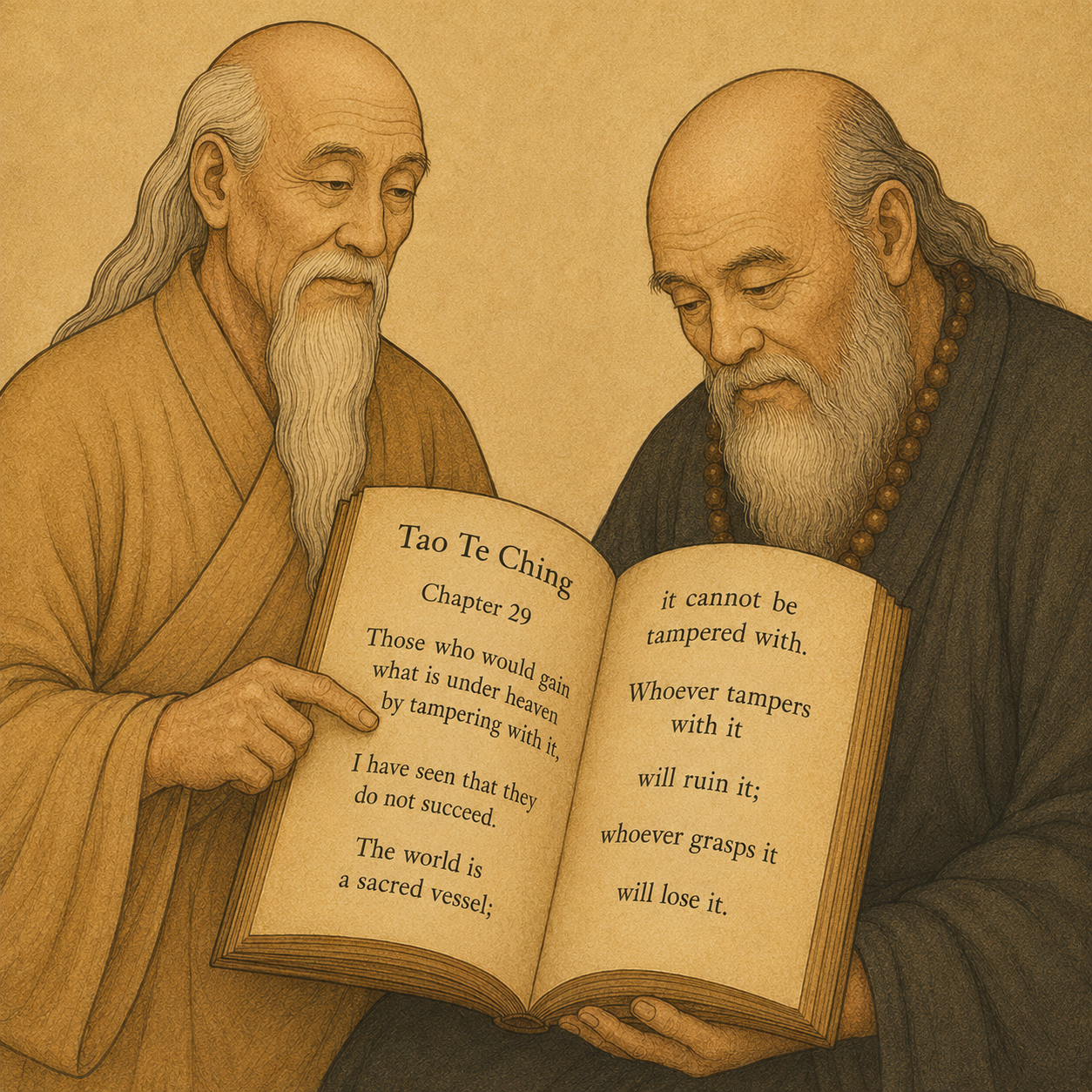
This is a direct violation of not only universal human ethics but also — if we are to appeal to the authority of ancient Chinese wisdom — the fundamental principle of the Tao Te Ching. Chapter 29 states:
"Those who want to take over the world and rule it by force, I see that they will not achieve their goal. The world is a sacred vessel; it cannot be acted upon arbitrarily. Those who rule it by force will destroy it. Those who cling to it will lose it…"
The manipulator who forcibly retains people who have announced their break with him not only does not follow the Tao — he actively acts against it. But charlatans, of course, do not notice such "trifles." Their Tao is their wallet and their power.
5.7. Promotion of dangerous health practices
In addition to promoting various gymnastics (beneficial in their health-improving form), the manipulator has repeatedly stated in his public lectures that he sleeps only 4 hours a day and has followed this regimen for many years, offering this practice to his students and followers. This directly contradicts the findings of sleep science: chronic sleep deprivation increases the risk of cardiovascular disease, diabetes, and cognitive impairment. In essence, he promotes a practice that is dangerous to health.
For a driver, a high-rise construction worker, or a machine tool operator, sleep deprivation creates a lethal risk — both for themselves and for others. Through his advice, the manipulator potentially endangers the lives of innocent people.
The Chinese state systematically suppresses all forms of pseudoscientific influence on public health. For these words alone, in modern China the manipulator could face at least administrative liability (Article 8 of the PRC Law Against Unfair Competition — prohibition of false information about goods and services, including their effects on the body).
07.05.2026, after reading this article, the manipulator began to make excuses, claiming that he is a carrier of a unique gene that allows him to sleep 4 hours a day without harming his health.
Commentary by the author (CyberSecurity & Social Engineering):
It is true that an extremely rare mutation in the DEC2 gene (as well as in the ADRB1 and NPSR1 genes) exists, which allows some people to sleep 4–6 hours without visible consequences for cognitive functions.
HOWEVER:
- Range, not a norm: Studies of carriers of such mutations show that they sleep from 4 to 6 hours (on average about 5), not strictly 4 hours. Their bodies simply recover more efficiently during sleep.
- Statistical anomaly: Such people are an extreme rarity (by various estimates, 1 in 25,000 – 100,000 people). The probability that the manipulator actually possesses such a trait is negligible. More likely, he is simply abusing his body with chronic sleep deprivation, or he is simply lying about sleeping only 4 hours a day.
- The absurdity of propaganda: Even if we assume the improbable and agree that the manipulator is a carrier of such a gene, mentioning in public lectures a practice that is beneficial (and even that is a stretch) for 1 person in 50,000, but dangerous for everyone else, is not just stupidity, but criminal negligence and a direct path to undermining the health of trusting listeners.
5.8. Creating the visual image of an ancient sage against the backdrop of the absence of a doctoral degree
The most tragicomic thing is that to reinforce the image of an ancient sage, the manipulator constantly wears an ethnic Chinese costume from the early 19th century and has grown a long beard. What's more — he started walking barefoot. Although in modern China, among managers and academics, prestige is associated with a black suit and black shoes, while wearing a beard is considered archaic (although in ancient China, as in many Eastern countries, a beard was indeed considered a sign of high status).
When another well-known sinologist remarked to him, "You are becoming a modern Don Quixote," the manipulator responded only with venomous insults.
To which he received the reply: when I see this man in a robe, barefoot, with a beard, coming toward me, I regret that it is impossible to resurrect Cervantes so that he could describe his exploits.
The manipulator holds no academic degree whatsoever and has never made any attempt to earn one in the countries of the CIS, Western Europe, the United States, or China itself. The absence of a doctoral degree is compensated for by the presence of a beard and an ethnic costume.
A legitimate question arises: if a person translates classical philosophical texts of ancient China, writes dozens of books on culture and strategy, and has been doing this for over 20 years — what prevents him from defending a doctoral dissertation at least at the most liberal university in his own country or neighboring Eastern European countries? The answer is simple: he has so thoroughly tainted himself with mysticism and occultism through his public lectures and the sale of closed courses that he would be rejected without even having the dissertation accepted for review.
5.9. Section 5 Postscript
As noted above, for many centuries (from the Han dynasty, 202 BCE – 220 CE, until the fall of the empire in 1911), the official state ideology of China was Confucianism (not Taoism!) — an ethical teaching about the noble man, humanism, and filial piety. At its core, Confucianism had no ideas of an occult or magical nature: its foundation was always ritual (adherence to ethical, noble principles of conduct, not magical ceremonies), virtue, and social harmony. The veneration of spirits was secondary and often formal in nature ("Give due respect to spirits, but keep them at a distance" (Lunyu, 6.20)), while the primary focus was always the direct ethical conduct of the individual person.
Chan Buddhism, like Buddhism in general, based on the Buddha's own words, calls for believing nothing on mere authority — not even the Buddha himself — and subjecting everything to thorough personal verification. The famous "Kalama Sutta" explicitly lists ten sources not to be blindly trusted: oral tradition, hearsay, sacred scriptures, logical reasoning, and even the authority of a teacher. The Buddha taught: "When you yourselves know that these qualities are wholesome, praiseworthy, approved by the wise, and when adopted and carried out lead to welfare and happiness — then follow them." This created within the Buddhist tradition a powerful internal mechanism of self-verification and protection against distortion.
The greatest abuses and distortions, unfortunately, affect the philosophy of the I Ching and Taoism. Taoism operates with complex, difficult-to-verify abstract concepts — the "Way" (Tao), "Qi," "non-action," and others. Historically, Taoism was closely intertwined with folk cults of immortality, magical practices, and communication with spirits, which created fertile ground for mystical and occult interpretations. For all the wisdom and richness of the cultural heritage of Lao Tzu and Chuang Tzu, Taoism, unlike Confucianism and Buddhism, did not develop equally strong internal criteria for self-defense against distortion and misinterpretation. It is precisely the abstractness of Taoist concepts that has made them particularly vulnerable to vulgarization and commercialization in the modern era — from "energetic" qigong practices to promises of "opening the third eye."
Thus, Confucius's thesis — "Give due respect to spirits, but keep them at a distance" — leaves very little room for occult abuses.
The Buddha's thesis — "Believe nothing on mere authority, not even the Buddha himself, until you have carefully verified it for yourself" — leaves even less space for occult abuses.
But Lao Tzu's thesis — "The true Tao is ineffable. What is said is not the Tao" — unfortunately becomes fertile ground for abuse by modern manipulators and charlatans who prey on people unprepared for a deep understanding of the subtlety of Taoist philosophy.
For example: if what is said is not the Tao, then how can the manipulator discussed in this article prove that his books have any relation to the Tao at all, rather than being merely his own personal opinion, bearing no relation whatsoever to the authentic Tao?
If you are interested in the ethics of Chan Buddhism or Taoism — that is your personal choice. But if you want to properly study the traditional culture of China, it is better to start with Confucianism, as it was this teaching that played the key role in governing the country for many centuries. The role of Taoism and Chan Buddhism in state governance was minimal and incomparable to that of Confucianism. However, for a complete and proper understanding of traditional Chinese culture, it is best to study all three major schools of thought, as it is their combination that creates the unique traditional culture of China. If someone claims that the foundation of Chinese culture is the I Ching and/or Taoism, while downplaying or dismissing Chan Buddhism and Confucianism, know that such an approach is very inaccurate and far from historical reality.

6. Conclusion: A Clear Mind and a Pure Heart Against Romanticized Illusions
It is worth noting that, although the manipulator indeed has a good command of the Chinese language and is capable of making competent translations of ancient texts, he is a philologist and translator, not a historian or sinologist. Sinology is primarily history, the logic of historical processes, economics, and sociology — not just language. The Chinese writing system, while unique and having its own characteristics, plays an important role in culture. However, its specific features are not the determining factor in the development of civilization.
Language is a tool for communication and discussion, not a determinant of the decision-making logic that underlies historical development.
In other words, if a person, for example, has an excellent command of the Latin language, that does not automatically make them competent in the history and culture of Ancient Rome. At the same time, the history of Ancient Rome can be thoroughly studied without learning the Latin language itself.
Understanding Chinese culture first requires an analysis of the logic of historical processes. Following a complex period of radical re-evaluation of traditions, China developed a rational, scientifically grounded system of perceiving reality. This system retains respect for cultural heritage while rejecting the direct reproduction of occult practices and philosophical concepts that lack empirical support.
The modern scientifically grounded view of reality is an integral part of Chinese culture and an important stage in its history. It is at this stage that China has achieved significant progress in science, technology, and the standard of living of its population.
Let us draw a line.
You should not believe any romanticized images of "wise, mysterious ancient civilizations" and their "direct continuity," unless these images are explicitly positioned as fiction. If you are told, "Ancient knowledge will reveal the truth to you," ask yourself: who has tested this knowledge? On what experiments is it based? What objective results has it produced in the last 100 years?
The heritage of ancient culture should be studied exclusively from the perspective of modern science, relying on logic, facts, and reliable historical knowledge. To study means to analyze, compare, understand the context, separate the grains of rational experience from the chaff of mythology. Not to worship and not to fall into a trance.
And one last, most important thing.
Eastern countries — whether they are countries of Islamic culture, Buddhist, Taoist, or Confucian tradition — are not countries of wizards. They are not Aladdin's lamp, not a magic carpet, and not a magic book of predictions that will give you ready-made answers to business questions with three coin tosses.
These are countries with a very long, complex, and often filled with truly wise, tragic experience of the history of the formation, survival, and development of civilization. Millennia of ups and downs, wars and peace, famine and abundance, tyranny and wise rule. The diligent, continuous intellectual labor of hundreds of generations of people who wrote, argued, made mistakes, found truths, and lost them.

The rebellion of the "Taiping Dao" ("Great Equality") sect, followers of a distorted eschatological version of Taoism, led to the overthrow of legitimate authority, widespread destruction, and the exhausting civil war of the Three Kingdoms era. According to historians' estimates, China's population fell from 50–56 million before the rebellion to less than 8 million after the end of the civil war.

The seven grand voyages of the Ming Dynasty fleet covered Southeast Asia, India, the Middle East, and East Africa. The Chinese "treasure ships" reached the shores of Kenya and Tanzania almost 80 years before Vasco da Gama. The admiral commanded up to 317 ships and 28,000 men — making it the most powerful fleet in human history at that time.

According to historians' estimates, the flagship reached 120–140 meters in length. Even if we accept the conservative estimate of 60–70 meters, it was still twice as large as any European ship of that time.
1. Nine masts with enormous square-rigged sails were arranged in two rows.
2. Iron anchors, 2.5 meters long and weighing about 500 kg, ensured reliable anchorage on the roadstead.
3. A special crane was used for cargo operations.
4. The ships' stability was ensured by the great width of the hull and substantial ballast.
5. Animals carried on board were intended for food or trade.
6. Bronze cannons mounted on the flagship protected the "treasures," while smaller warships constantly escorted it.
7. Between 500 and 1,000 passengers, along with numerous exotic animals, could be accommodated aboard the flagship.
8. The rudder could be raised or lowered. Besides steering, when lowered it acted as a lateral resistance surface, reducing drift and preventing the ship from being blown off course by the wind.
9. Fresh vegetables were cultivated on board during the voyage.
That is what is truly worthy of study. With a clear mind and a pure heart. Without ecstasy, without blind faith, without trying to find the "magic button."
And certainly you should not believe arrogant pseudo-scientists who themselves absolutely do not respect Eastern culture, but simply parasitize on its authority, using it for their own dishonest business. Those who shout louder than anyone about "ancient wisdom" most often understand it the least and follow it the least.
Be attentive. Check the facts. Think for yourselves. This is the only defense that really works.
🤖 An alternative to I Ching divination
A free version of the artificial intelligence DeepSeek (deepseek.com), created by a Chinese private company, is available. It is capable of providing accurate, structured, and factually grounded answers on Chinese history. This is an example of the real — not mythical — technological success of China.
 DeepSeek — a powerful open-source AI assistant. Free, fast, available on the web and in apps.