The Great Pretenses of a Great Dictator
📋 TL;DR — Table of Contents
- What this article is about: Analysis of the phenomenon where showmanship ("grandiosity") takes priority over real effectiveness in totalitarian systems, using examples of military projects (navy, submarines, "Poseidon," "Burevestnik") and the R-16 disaster where grandiosity cost human lives.
Introduction

Great dictators love to show off.
The joke is that arrogant showmanship is more important to them than objective results.
If a dictator is faced with a choice between two technologies — one that will produce a real effect (for example, on a state's defense capability), and another that will produce no real effect but will allow pompous talk about a "wunderwaffe," something "unparalleled," about "great power," "empire," and "this is no ordinary lamb and khinkali," all accompanied by myths about the "superiority of certain Roma over American military equipment" — the Great Dictator will inevitably choose the second option.
And all this will be done amidst the frantic howls of all sane generals, officers, and designers:
"What the hell are you idiots doing?!"
…and amidst the barely concealed joy of all sane generals, officers, and designers on the other side of the barricades, who see the dictator enthusiastically throwing colossal sums of money into pompous but strategically useless projects.
The enemy will, of course, formally feign fear:
"Oh, we're so afraid of your wunderwaffe! Oh, we're trembling in our boots just at the sight of it!"
— solely so that the dictator rejoices and continues to fund this absurdity.
In Japan, generals faced with such disgrace would most likely commit seppuku or, at the very least, throw themselves from a skyscraper — in protest against clinical idiocy.
In Great Britain, they'd shoot themselves.
In the US, they'd create a massive journalistic scandal.
And in our deeply esteemed by all "civilized" countries God-chosen Fatherland, they simply go on a bender and try not to leave it unless absolutely necessary. Because a sane, sober-minded person is not capable of watching absurdity, completely incompatible with objective reality, for long.
But who would listen to talented generals, experienced officers, and educated experts when we have our beloved Bezobrazov clique — or any of its modern equivalents: a pack of court sycophants, adventurers, schemers, and, of course, embezzlers. They are the ones who will inevitably whisper to the Great Dictator:
"We need to show them! So they'll fear us! So they won't mock us!"
The result is always the same: instead of effective, relatively inexpensive, and unostentatious systems, systems that produce a lot of show, cost an exorbitant amount of money, and are practically ineffective are chosen.
📋 TL;DR — Introduction
- Core idea: In totalitarian systems, showmanship ("grandiosity") is more important than real effectiveness. The dictator chooses expensive, pompous, but strategically useless projects, ignoring the opinions of generals and experts.
Examples
Designers created quite modern corvettes, frigates, and small missile ships. It would seem — the technology exists, just take it and support mass serial production of already existing high-quality modern equipment.
But no — status-driven imperial grandiosity is needed.
Instead, money was poured into the repair and "modernization" of the "Kuzya" and the now-submerged cruiser "Moskva."
Although a sober assessment of the God-chosen Fatherland's fleet doctrine makes it clear: the country cannot sustain a full-fledged ocean-going fleet. The relics of the Soviet era should be honestly decommissioned, and resources directed toward the serial production of frigates, corvettes, and small missile ships.
The money spent could have built at least two modern frigates with full-fledged air defense systems capable of intercepting modern anti-ship cruise missiles.
But serial frigates are "unimpressive." However, a "nuclear aircraft carrier killer" or an aircraft carrier itself — that's cool. This way, one can "intimidate the West with bravado."
Well, at least believe that you have — because Western analysts have long known all the vulnerabilities of these old Soviet tubs.
Result:
- minus the cruiser "Moskva," sunk by two serial anti-ship missiles;
- minus the "Kuzya," placed into eternal repair;
- minus two modern frigates that would have genuinely strengthened the country's defense capability for decades to come.
📋 TL;DR — Examples
- Navy: Money poured into the "grandiose" repair of old Soviet cruisers ("Kuzya," "Moskva") instead of serial production of modern frigates. Result: cruiser "Moskva" sunk, "Kuzya" in eternal repair, two frigates not built.
Submarines — An Example of Sound Pragmatism
The USSR did indeed create the most powerful submarine fleet in the world — and here, sound pragmatism was present.
A submarine is extremely difficult to detect; in fact, it can only be reliably tracked while being serviced in port. Modern submarines can fight from a submerged position: launch torpedoes and missiles, including through torpedo tubes, lay minefields, deploy special forces teams, probes, and drones — all without surfacing.
Nuclear submarines and submarines with anaerobic power plants are a real headache for an adversary.
Even German submarines from World Wars I and II inflicted colossal damage on Great Britain. And modern ones are even more formidable.
Extremely effective weapons. But — not showy.
And they need to look showy.
You can't intimidate with bravado using serial submarines similar to those of a potential adversary. You can't boast a wunderwaffe.
And so, in the God-chosen Fatherland, there are three main projects: the "Borei" strategic missile submarine, the "Yasen" multi-purpose nuclear submarine, and the modernized "Varshavyanka" diesel-electric submarine.
There's also a fourth — experimental: an attempt to create its own anaerobic submarine following the example of Sweden and Germany. So far — unsuccessful.
Many old Soviet submarines are worn out, incapable of going on patrols, and serve "tethered," which makes their existence meaningless: enemy satellites monitor them 24/7.
It would seem the course of action is obvious: build more "Yasen," "Borei," modernized "Varshavyanka" submarines, actively develop the anaerobic theme — do what pragmatic people do.
But no.
They decided to show off and create the "Poseidon" project.
They took a standard "Yasen," cut it up lengthwise and crosswise, and cobbled together a miracle of engineering pornography: a nuclear submarine with torpedoes equipped with nuclear power plants.
Similar projects were considered in the USSR, but fortunately, the equivalent of "Poseidon" was buried at the concept level, and the topic of small nuclear power units was closed after unsuccessful tests — as too expensive and risky. Sound reason won then.
But the blueprints remained.
And now the Great Dictator decided to turn this scarecrow into reality. An expensive project, unprofitable, unreliable, difficult to operate, and of questionable effectiveness.
Neither the US nor China — for all their technological power — engage in such projects. They build serial nuclear submarines of the traditional concept, reducing noise, improving sonars, and enhancing versatility. They refrain from engineering pornography.
Because it's absurd.
But at least now the dictator has a status-driven scare:
"We'll unleash a radioactive tsunami on you!"
The same goes for the "Burevestnik" system, a missile with a nuclear power plant.
Given that the Fatherland already has the highly effective "Yars" system. It would seem — develop it, modernize it, mass-produce it. Everything is tested, works, effectiveness proven.
But no. They have to show off.
Result: money spent, successful tests — none.
While the "Poseidon" mega-torpedoes with nuclear power units are at least cooled by water, making the project formally viable, the "Burevestnik" with air cooling is much worse: air friction at high speeds doesn't cool — it heats up the body.
This is a one hundred percent waste of time, resources, and the engineers' labor — down the drain.
But development continues.
And thank God. Because the adoption of yet another serial modification of "Yars" really would have made the West tense up. Instead, resources go into another piece of engineering pornography — for the opportunity to proudly declare: "Now the whole world will shudder!"
So, if you read this — pass it on to the Tsar-Father:
In England, they don't make missiles with nuclear power units. God forbid there's a war — they won't be able to fly.
While the dictator throws his grandiose tantrums, the US Department of Defense, quietly, secures funding and creates truly effective serial weapons.
And grandiosity remains grandiosity.
Resources, effort, and time are spent. The result is not just zero, but negative: the country has not gained effective weapons and has wasted resources on useless items, only good for bravado in speeches:
"Oh, we'll get you now — pow, bam, like that!"
Showmanship and narcissistic admiration of fake power kill truly successful projects.
Because pragmatism is pure efficiency, having nothing to do with grandiosity.
Just as a smug vulgarian will never whitewash the walls with lime, the Great Dictator will never abandon grandiosity.
Because grandiosity is not a glitch of the totalitarian system — it is its natural component.
Therefore, any dictatorship, with all its grandiosity, is doomed.
The only question is:
how much harm will it manage to inflict on itself and others before it dies, and all its grandiosity is scattered to the winds.
Various kinds of puppet masters, manipulators, and petty despots act on the same principles: trying to establish control over you, they demonstrate maximum grandiosity. And here it is crucial to understand that behind this show of "greatness" and "superiority," behind the myths of "brilliant multi-move schemes," there is nothing but crude tyranny and the most primitive violence — blackmail, terror, and outright lawlessness, which is not condoned even in the criminal underworld.
📋 TL;DR — Submarines and Engineering Pornography
- "Poseidon" and "Burevestnik": Instead of developing effective serial systems ("Yasen," "Borei," "Yars"), the dictator chooses expensive, unreliable "grandiose" projects (mega-torpedo with nuclear power unit, missile with nuclear power unit). Result: money spent, no successful tests, real defense capability not strengthened.
When Grandiosity Costs More Than Lives (Others', Of Course, Not Their Own)
But the worst part is that in the pursuit of demonstrating superiority — regardless of whether the project is successful or knowingly doomed — the "Great Dictator" will calmly and cold-bloodedly risk people, subjecting them even to mortal danger, just to prove his strength and unyielding resolve to an opponent.
A textbook example — the Soviet R-16 (8K64) missile designed by Yangel. Autumn 1960. The Cold War is in full swing. The USSR is desperately trying to catch up with the US in the number of ICBMs and at any cost make a "leap above its head." The country's leadership gave a clear order: launch no later than October 24, in time for the next anniversary of the revolution. Preferably before the Americans demonstrate another new weapon.
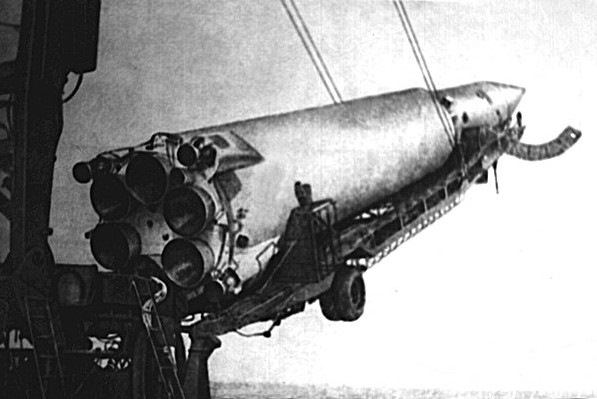
And so, on October 23, at the Baikonur Cosmodrome, during pre-flight tests, a serious malfunction was discovered in the control system of an already fueled missile (the R-16's fuel was horrifically explosive — heptyl with nitric acid). What does a normal person do? Drain the fuel, fix the defect, refuel, and launch a few days later. Yes, deadlines are missed, yes, it's a blow to "grandiosity" — like America is ahead again.
But the order from above was: "Launch at any cost on the 24th."
And then the madness begins. The cosmodrome management and the chief designer (position: Chief Designer of OKB-586, Mikhail Kuzmich Yangel) are ordered to repair the missile while fueled, without draining it. Safety protocols go to hell: sparks, tools, hundreds of tons of explosive mixture all around. A game of Russian roulette with dozens of lives.
To demonstrate "solidarity with the scientists, engineers, and workers" — but in essence, to show: "I am not a coward, the leadership can be proud of me" — Mikhail Yangel himself sits on a chair just a few meters from the faulty missile. He becomes a hostage to the same diktat: aim higher, show off for the "higher-ups," prove loyalty.
On October 24, 1960, a few minutes before the intended launch, at 18:45, the sustainer engine in the second stage spontaneously started. A jet of incandescent gas burned through the first-stage fuel tanks.
Consequences: an explosion of monstrous force.
The R-16 disaster at Baikonur, October 24, 1960
Dozens of people died instantly, including Artillery Marshal Mitrofan Ivanovich Nedelin — Commander-in-Chief of the Strategic Missile Forces, who personally supervised the preparations and was also on the launch pad "for encouragement." Yangel miraculously survived (he was thrown by the blast wave, suffering severe burns and contusion), but his grave responsibility for the deaths of people has never been officially acknowledged anywhere.
Priceless, unique specialists — those who created the country's missile shield — perished. The cosmodrome's equipment was destroyed. The missile itself was reduced to a pile of twisted metal.
But could it have been done differently? Yes. They should have simply drained the fuel. Repaired the missile, strictly following safety protocols. Then refuel it again. And launch a little later. Saving lives, equipment, the missile itself, and its payload. And even saving face — because an accident witnessed by the whole world is far worse than a "slight delay."
But no. For the "great dictator," whoever they may be — a physical person, a legal entity, a corporation, a management structure — grandiosity will always be above the life and health of people. People are merely expendable material on the path to demonstrating "unbreakable will" and "superiority." And the R-16 disaster is not a tragic accident, but a regularity of a system where safety, common sense, and human lives are sacrificed to tyrannical, pompous greatness.
📋 TL;DR — The R-16 Disaster
- Textbook example: Order to launch the missile at any cost by October 24 — repair while fueled, gross safety violations. Explosion: dozens dead (including Marshal Nedelin), equipment destroyed, missile wrecked. Grandiosity cost more than human lives.