Disclaimer: The subject of this article is the technical characteristics of the "Oculus" and "Boar" systems, as well as the tactics and strategies of their application. The political situation in a specific country is described solely for understanding the context in which these systems are used, and for a more accurate and illustrative understanding of the systems themselves. The author does not aim to engage in political criticism, adhering strictly to a scientific approach and unbiased conclusions. This is an example of systems whose analogues exist and are also used in other countries.
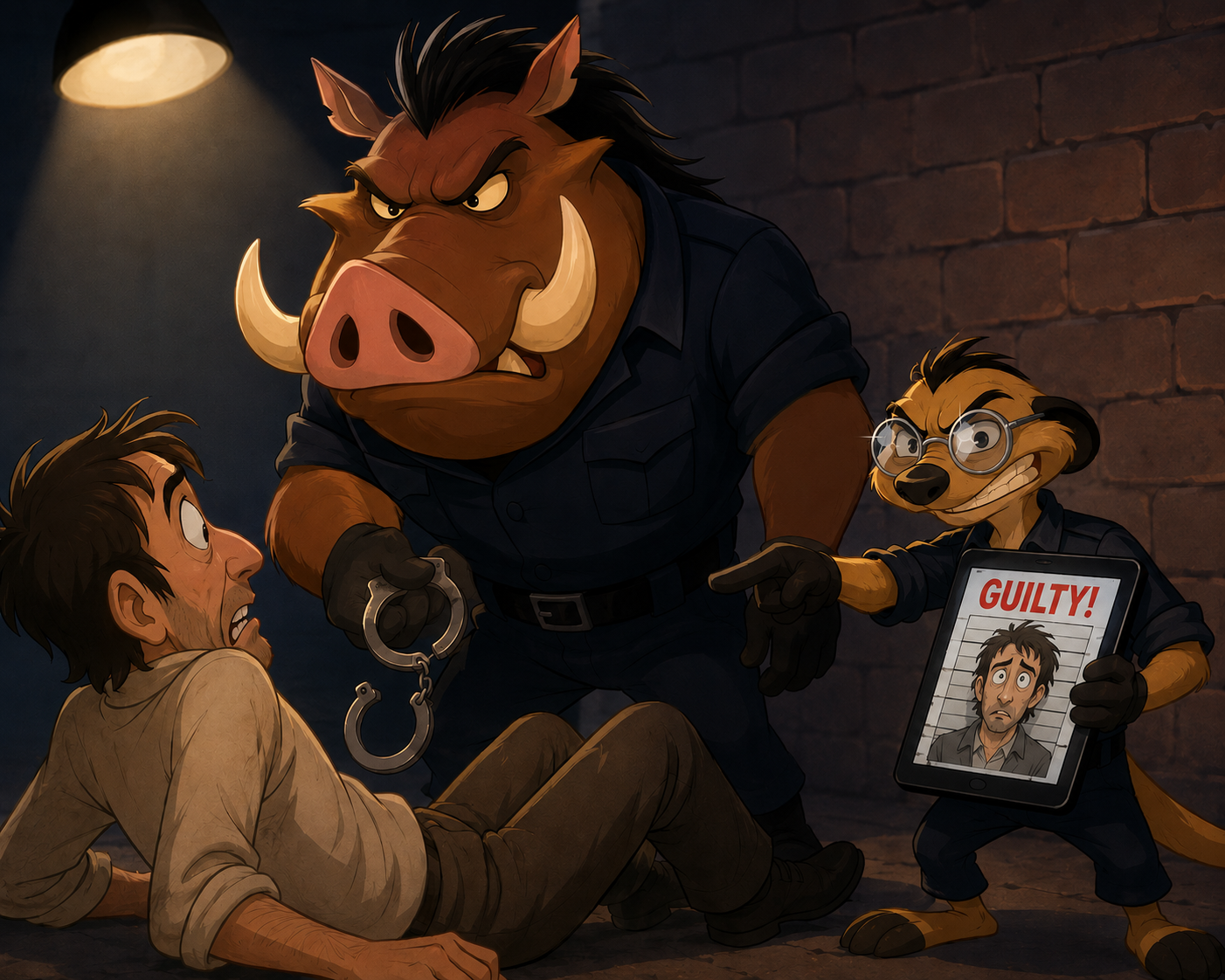
"Oculus" and "Boar" — Neural Network Monitoring Systems of Russian Security Forces
📋 TL;DR — Contents
- What this article is about: An analysis of the neural network monitoring systems "Oculus" (image analysis) and "Boar" (text monitoring and prediction) used by Russian security forces for the automated detection of "undesirable" content.
1. History of Creation
Center "E" (officially: the Main Directorate for Combating Extremism of the Ministry of Internal Affairs of the Russian Federation) is an independent and one of the most influential law enforcement units within the structure of the Russian Ministry of Internal Affairs. Simply put, it is the political police, tasked with searching for, controlling, and suppressing any dissent, opposition activity, and civil protests within the country.
The agency was established by presidential decree in September 2008. It was formed on the basis of the liquidated UBOP (Directorate for Combating Organized Crime). Personnel and harsh methods of working with criminals were redirected to the political sphere.
📋 TL;DR — History of Creation
- Center "E": Established in 2008 on the basis of UBOP as a political police force to suppress dissent and civil protests.
2. What Exactly Does Center "E" Do?
- Internet monitoring. Operatives from the center continuously scour social media, Telegram channels, blogs, and forums. They are the ones who find "sedition": anti-war posts, criticism of the authorities, "likes" and "reposts" of materials from independent media or foreign agents.
- Compiling dossiers and maintaining lists. The agency maintains databases on all opposition figures, human rights activists, civil activists, independent journalists, and writers. Their internal reports and references often form the basis for the Ministry of Justice's decisions to label people as "foreign agents."
- Working at rallies and protests. Employees of Center "E" are always present at any public gatherings. They are usually dressed in civilian clothes ("plainclothes"), conduct covert video surveillance of protesters, identify leaders, and coordinate the harsh detentions carried out by security forces.
- Initiating criminal and administrative cases. It is Center "E" that acts as the main complainant under articles concerning "discrediting the army," "fake news," "insulting the feelings of believers," "inciting hatred or enmity," and "extremism." They order "pocket" expert assessments from loyal linguists to "prove" the author's "guilt."
📋 TL;DR — Functions of Center "E"
- 4 main functions: Internet monitoring, compiling dossiers and lists, working at rallies (covert filming, identifying leaders), initiating criminal and administrative cases through "pocket" expert assessments.
3. What Is Their Main Specificity?
- Working without a uniform. You will never see a Center "E" operative in a police uniform on the street. They wear regular civilian clothes to blend in with the crowd.
- The "stick" system. The effectiveness of employees is measured by the number of cases initiated and "crimes" found. Since there are few real terrorists and extremists in everyday life, the agency artificially fabricates cases from internet posts, comments, and petition signatures.
Taking a vivid example from the dystopian comic-book universe of the film "V for Vendetta," Center "E" plays the role of the "Thought Police." They do not monitor public safety, but rather ensure that citizens do not think or speak out contrary to the official state line.
Russian independent authors face automated social media monitoring by AI systems ("Oculus," "Boar"), tracking through facial recognition systems, "preventive conversations" with operatives, and accusations based on state-loyal "pocket expert assessments." This system creates an atmosphere of total insecurity, where legal norms are replaced by political expediency. Such practices, including the use of covert filming at events, have been documented by human rights organizations such as "OVD-Info" and "Setevye Svobody."
This reality indeed resembles a dystopia, but it is documented in thousands of court cases. The Russian repressive machine operates at the intersection of Soviet KGB practices and 21st-century digital technologies.
📋 TL;DR — Specificity of Center "E"
- 2 features: Working without a uniform (civilian clothes) and the "stick" system (evaluation by the number of cases initiated, fabrication of cases from internet publications).
4. Total Automated Social Media Monitoring
Security forces no longer search for "sedition" manually — neural networks and algorithms, developed by order of Roskomnadzor (RKN) and the Main Radio Frequency Center (GRChTs), do it for them.
- The "Boar" system: An artificial intelligence that continuously scans Telegram, VKontakte, Facebook, and other platforms. It searches not just for forbidden words, but for "points of tension" and "potential threats." The system can analyze context, identify authors of anonymous channels through indirect digital traces, and predict the spread of protest sentiments.
- The "Oculus" system: A neural network that analyzes graphic content — images, memes, photographs, and video frames. It automatically recognizes politicians' faces, caricatures of the country's leadership, anti-war symbols, and inscriptions on posters.
- Digital footprint: It is enough to like a post or leave a comment for the algorithm to add the account to an automatic report. This report is then forwarded to Center "E" or the FSB for manual processing.
📋 TL;DR — Automated Monitoring
- Two AI systems: "Boar" — text monitoring and prediction of protest sentiments. "Oculus" — analysis of graphic content (memes, caricatures, symbols, faces).
5. Covert Filming and Digital Surveillance ("Plainclothes Officers")
For those engaged in public activities within the country, leaving the house is accompanied by constant visual monitoring.
- Operatives at events: At any independent lectures, poetry evenings, trials of political prisoners, or simply meetings of like-minded people, Center "E" employees in civilian clothes appear. They do not hide small video cameras or film events directly on their phones. This is needed to record faces, create a database of connections ("who communicates with whom"), and find grounds for accusations of an "unsanctioned mass event."
- Facial recognition system (e.g., "Sfera" in Moscow): The network of city cameras is connected to the databases of security forces. If an activist or blogger is on a "preventive list," then when they pass through a metro turnstile or past a street camera, a signal is sent to the dispatcher's console. People are regularly detained in the metro preemptively — for example, on days of public holidays or suspected rallies, simply "for document checks."
📋 TL;DR — Covert Filming and Facial Recognition
- 2 methods of control: Operatives in civilian clothes with video surveillance at events. Facial recognition systems (e.g., "Sfera") with automatic alerts about the appearance of "targets" in public places.
6. Summons for "Preventive Conversations"
This is a method of psychological pressure that is often not legally formalized but is intended to intimidate the person.
- Phone call or visit home: An operative calls the personal number or comes to the author's home early in the morning. The person is "invited" to come to the department or have a conversation on the spot. There is no official summons — security forces use psychological pressure ("it's better for you if we just talk").
- The essence of the conversation: In the office, the person is shown a folder with printouts of their posts or poems. The operative explains directly: "We see everything, we are watching you (using the 'Oculus' and 'Boar' systems, which continuously monitor your posts). The next step is a criminal case. You have a choice: stay silent, leave the country, or start cooperating." Legally, this conversation commits you to nothing, but afterwards, the person understands that they are on the verge of arrest.
📋 TL;DR — Preventive Conversations
- Method of psychological pressure: A phone call or visit home without an official summons, displaying printouts of posts with the threat of a criminal case, and offering a "choice": stay silent, leave, or cooperate.
7. "Pocket" Linguistic Expert Assessments
When security forces need to initiate a real case (administrative or criminal), they require formal legal justification. They cannot judge the meaning of a text themselves, so state experts come onto the scene.
- Their own institutes: The Investigative Committee and the Ministry of Internal Affairs send texts (poems, posts, videos) to state-approved expert centers (e.g., the Center for Expertise at St. Petersburg State University or the ECC of the Ministry of Internal Affairs).
- Pseudo-scientific "newspeak": Linguistic experts use maximally vague formulations to fit the text to the article. Their conclusions include phrases like: "The author uses hidden metaphors with the aim of forming a negative attitude towards government bodies" or "The text contains a hidden intent to discredit."
- Ignoring context: Experts may take a single line from a poem or an ironic post, completely ignore the artistic intent, and claim that it "calls for extremism." It is impossible to challenge such an expert assessment in court: Russian courts simply refuse to attach alternative research from independent scientists to cases.
📋 TL;DR — Pocket Expert Assessments
- 3 features: Expert assessments are conducted in state centers. Vague formulations are used to fit the text to the article. Context and artistic intent are ignored. Courts do not accept alternative expert assessments from independent scientists.
8. Why This Works
This system is designed to keep a person in a state of constant stress. The person knows that cameras are watching them, AI is reading their posts (24/7 interactive automated monitoring), that someone may come to their home at any moment, and that any word of theirs can be twisted by an expert in uniform. This creates total self-censorship — the most effective form of control, where a person begins to remain silent out of fear.
The "Oculus" and "Boar" information systems really do exist, and they are not a figment of the imagination. They are official IT products developed by order of FSUE "GRChTs" (the Main Radio Frequency Center) — a structure within Roskomnadzor directly responsible for censorship and monitoring of the Russian internet. Their creation, contracts, and patents were openly published on the state procurement website and in Rospatent. In the unified digital surveillance system, these two neural networks perform different but complementary tasks: "Oculus" is the "eyes" of the system, and "Boar" is its "brain."
📋 TL;DR — Why This Works
- The effect of total self-censorship: Constant stress, round-the-clock monitoring, and the impossibility of challenging an expert assessment create an atmosphere of fear that forces people to remain silent. The systems really exist and are officially patented.
9. "Oculus": Automatic Image and Video Analyzer
Before this system was implemented, Roskomnadzor employees manually searched for prohibited images, memes, and videos. They opened websites, public pages, Telegram channels, and visually checked the content. "Oculus" (from the Latin oculus — eye) fully automated this process.
- How it works: The system is built on a basis of convolutional neural networks (computer vision). It is capable of analyzing over 200,000 images and videos per day, spending about 3 seconds on each image.
- What exactly it looks for:
- Text in images: The neural network recognizes handwritten or printed text superimposed on photos, protest posters, or screenshots.
- Faces and caricatures: The system is trained to recognize the faces of specific politicians, opposition leaders, and top state officials (to instantly filter out insults against the president or visual memes about him).
- Symbolism: "Oculus" instantly recognizes prohibited logos, coats of arms, white-blue-white flags, pacifist signs, rainbow symbolism, and emblems of organizations recognized as "extremist."
- Action scenes: The algorithm classifies the visual content into categories: "protests" (crowds, posters, police), "violence," "drugs," "suicide."
If "Oculus" finds a match in its databases, it automatically generates a violation card, takes a screenshot, and sends it to the security forces to initiate a case.
📋 TL;DR — Oculus
- "Eyes" of the system: A computer vision neural network analyzing >200,000 images per day. Recognizes text in images, politicians' faces, caricatures, prohibited symbolism, and protest scenes.
10. "Boar": Predictor of "Information Bombs"
If "Oculus" works with what has already been published in the form of media files, the "Boar" information system is a large-scale analytical complex for text monitoring and prediction. Its task is to find so-called "points of information tension."
- How it works: "Boar" (developed by the St. Petersburg IT company "Neobit") continuously scans the textual space: media, blogs, forums, chats, and social networks. It searches not just for individual "forbidden words" but assesses the overall tone of publications, the speed of their reposts, and audience engagement.
- What exactly it does:
- Search for "infobombs": The system identifies resonant news stories that quickly gain views and provoke negative reactions from the population (e.g., posts about losses, mobilization, price increases, or criticism of local officials).
- Risk prediction: Based on AI algorithms, "Boar" attempts to predict whether an online discussion of a topic will escalate into a real street protest or mass discontent. It calculates how the news will spread in the coming hours.
- De-anonymization and source tracking: The program tracks chains of reposts to understand which particular public page or account the "wave" originated from (this helps security forces identify the authors of anonymous channels).
Officials from Roskomnadzor have stated that "Boar" is capable of detecting and recording content threatening to the authorities in just a few minutes.
An important technical detail: what is it built on?
At the end of 2024, Roskomnadzor officially patented the "Boar" system in Rospatent. Journalists noted an ironic fact: the main patriotic surveillance system for the Russian internet is built on the Ubuntu operating system (a Linux distribution developed by the British company Canonical). The server-side source code is written in Python and Go.
📋 TL;DR — Boar
- "Brain" of the system: Text monitoring and prediction. Search for "infobombs," prediction of protest risks, de-anonymization through repost chains. Built on Ubuntu, written in Python and Go.
11. Conclusion
Russia has deployed a fully automated factory of digital censorship. The neural network tandem of the visual filter "Oculus" and the semantic predictor "Boar" conducts round-the-clock screening of the media space, converting any digital trace into a ready-made legal basis for repressive actions by security forces.
Officially, "Oculus" and "Boar" are presented as systems serving law enforcement: they are designed to detect suicide propaganda and destructive cults, drug dealer offers, erotic content involving minors, and perform other standard police functions. However, these are dual-use technologies. With their help, one can analyze and suppress protest movements within the country, conduct reconnaissance in the web space of other states, and also carry out deep espionage against both one's own and foreign citizens.
This hardware-software complex is merely a local, yet most transparent example of a global trend. We are dealing with large-scale systems of intelligent monitoring, analysis, and prediction of behavioral patterns, which are being developed, scaled, and tested worldwide. Often, the proving grounds for such technologies are not closed laboratories with hired volunteers, but the living environment, where the targets for "zeroing in" algorithms become people who are undesirable to a particular system — whether political, corporate, or criminal structures.
To become a target for permanent pressure (including continuous 24/7 auditing of your digital activity), one no longer needs to be a professional revolutionary. It is enough to make a single public statement criticizing a structure that possesses such technological potential.
This is not science fiction cinema, not paranoid delirium, and not a conspiracy theory. This is a real, operational cyberweapon being adopted into service, already serving the sovereigns of the new digital era, and continuing to evolve continuously.
The tragedy lies in the fact that mass public consciousness still retains an inertia of thinking. Civil institutions continue to operate with outdated Cold War-era templates or those from the classical protest waves of the early 21st century, failing to notice that the habitat has fundamentally changed.
Today, it is necessary to learn to think not just in terms of the digital age, but in terms of radical dystopias. The systems of total suppression of personal autonomy described in them are no longer a metaphor. They are physically embodied in silicon, server stations, and software code.
This is our new reality.
This is precisely why the main splash screen of the site features an image of Morpheus offering the viewer two pills — the blue and the red.

A significant number of people prefer not to accept the reality that has arrived, not to believe what technologies certain power-seeking structures may possess, and to tell those who try to convey accurate information to them: "You're telling me fairy tales worthy of the Brothers Grimm; if I weren't a polite person — I'd tell you to go to hell."
What can be done in such a situation? At the very least, refrain from fruitless reasoning about abstract topics and rhetorical questions. Study computer science, cybersecurity, and civilian versions of artificial intelligence to understand the principles and patterns on which the modern world operates.
📋 TL;DR — Conclusion
- Main conclusion: Russia has deployed an automated digital censorship factory where "Oculus" and "Boar" turn any digital trace into a legal basis for repression. This is a local example of a global trend — intelligent monitoring and behavioral prediction systems are being developed and tested worldwide. This is our new reality.